
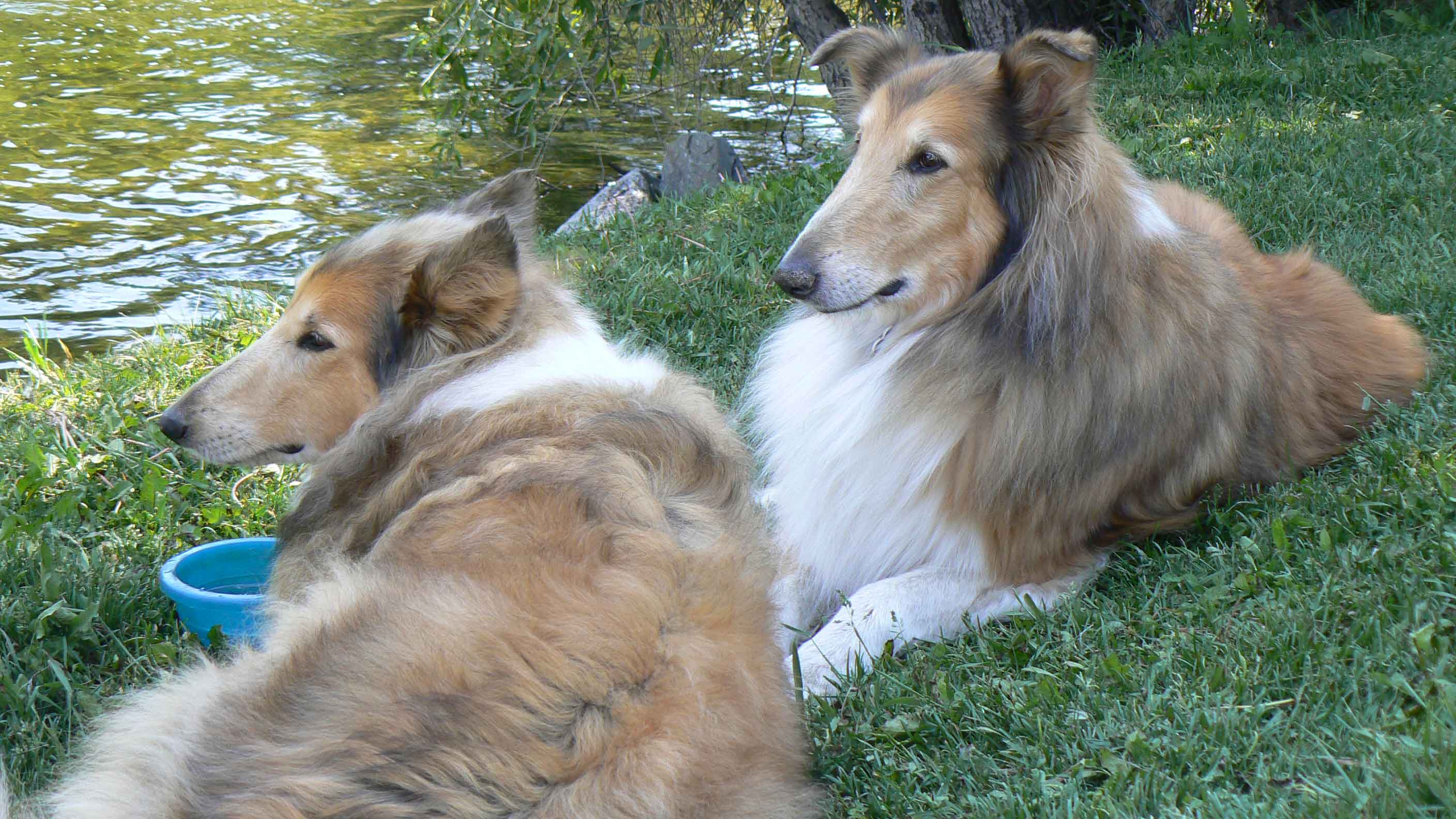
My acupuncturist tells me to “shake it off, like a dog”. A dog gets up, shakes himself and whatever is bothering him off, and gets on with his day. I think about this a lot, too.
An incident at our mountain cabin made me realize that not only dogs but probably all animals do this. The door was open and a bird flew in, veering to an upper window. Almost instantly, a bigger bird followed, heading straight and hitting the picture window at high speed. While we were looking after this bird, hoping it could survive the impact, we forgot about the smaller one. Once the smaller was sure the other was gone, he began fluttering. We had to climb a ladder and scoop him up in a hat. When we put the hat outside, he chirped and flew off to a nearby tree, where he continued to look at us and chirp happily for some time. I can only describe the expression on his face as blissful.
The bigger bird was a hawk, and I had to bury him in our bird graveyard. It was sad, but the songbird lived to sing again. He didn’t waste a second thinking about his ordeal or worrying about his narrow escape. He was ready right then to get on with the business of living.
Animals don’t have the luxury of wasting energy dwelling on life’s difficulties. And when did holding onto grievances become so widespread among humans that it looks like a survival mechanism? If that songbird were human, he would be recounting the incident to everyone, talking for years to a mental health professional, and perhaps blaming his family.
And why is my inclination to think of the marauding hawk as “he” and the gentle songbird as “she”? We can’t hide from our assumptions.
Here’s a poem about another bird who flew inside and had to be scooped up in a hat:
RUFOUS
Red-necked resplendent
ornery Rufous
flurries his wings
a mile a minute
sounds like a bumblebee
on steroids.


 Sweet Planet Poems